
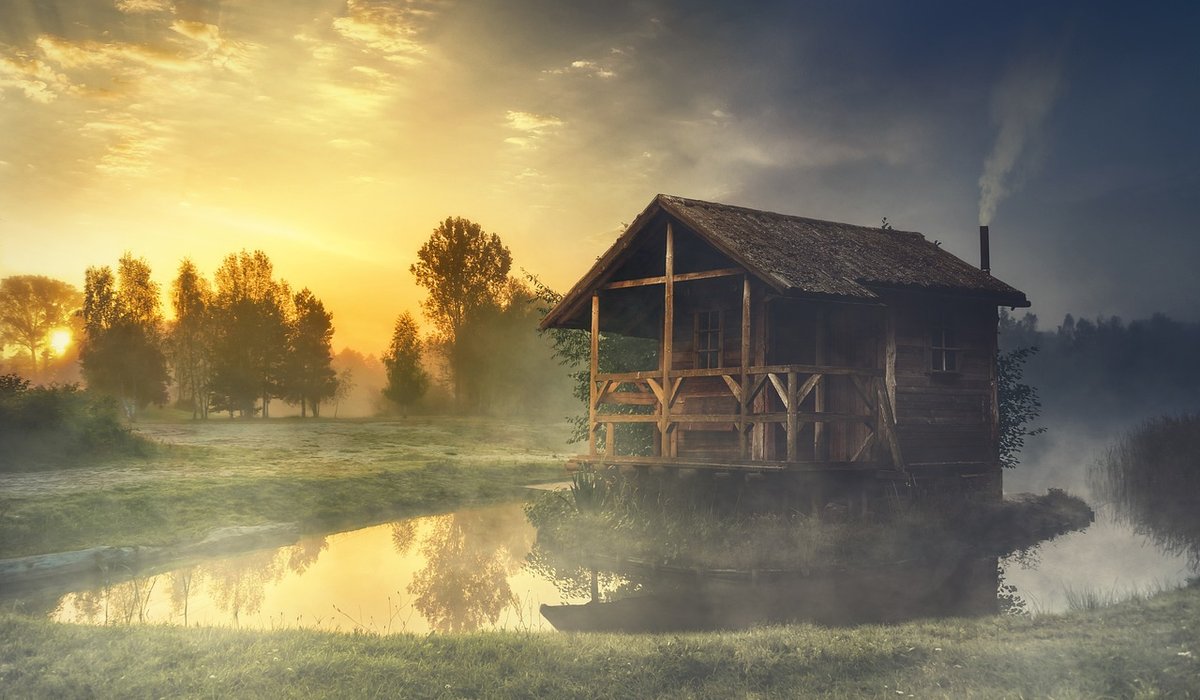
Walk into any British wood at the right time of year and you will notice something straight away: nothing clashes. The moss underfoot, the bark, the pale shafts of light through the canopy and the creamy lichen on old branches all sit together comfortably, because these are colours that evolved side by side. That is exactly what makes them so easy to live with at home.
A woodland palette built on moss green, bark brown and soft cream creates a room that feels calm without feeling bland. It is forgiving of everyday life, it flatters both old and new furniture, and it works beautifully in a cottage, a terrace or a modern flat. The trick is to use the colours in the right proportions and to bring in natural texture, so the scheme feels gathered rather than ordered from a catalogue.
Paint is the quickest route into a woodland mood, and it is worth taking your time over the exact shades. Moss green should feel damp and shady rather than bright and grassy, so look for greens with a grey or brown base. Think of the colour of a stone wall in a shaded lane, or the underside of a fern.
If you are nervous about committing to a deep green, paint a single alcove or the inside of a cupboard first. Deep colours in small spaces read as intentional rather than oppressive, and they give you a place to test the light before you go further.
Colour alone will not make a room feel like a wood. You need the softness of wool, the slight roughness of linen and the gentle unevenness of handmade things. Textiles are where a woodland scheme becomes genuinely cosy.
Layer a wool throw in undyed cream over a moss green sofa, add a couple of cushions in oatmeal and a deeper fern green, and finish with a heavy knitted blanket at the foot of the bed or chair. Look for wool that still shows its natural flecks and slubs; pure, uniform yarn loses the very quality you are trying to capture. British wool in particular comes in lovely muted greys and creams that sit perfectly with the palette.
For floors, a flatweave rug in bark brown or a jute runner in its natural tone will ground the room without competing. If you have bare floorboards, a slightly faded rug is better than a pristine one. Woodland is never neat, and neither should the room be.
The finishing layer is the one that makes visitors ask where you found everything. Bringing in real branches and foliage does more for a nature-led room than any amount of shopping, and it costs almost nothing.
Countryside crafts are the natural companion to this. A hand-thrown mug in a speckled cream glaze, a woven willow basket for logs, a carved wooden spoon left out on the worktop, a small piece of green oak left to silver on the shelf – these objects carry the same colours and the same unhurried feel as the woodland itself. Buying from local makers at a village market or a county show means each piece has a little story, and that shows in the room.
Swap fresh foliage every few weeks so it never becomes tired and dusty. A quick walk with a pair of secateurs is all the seasonal change the room needs.
Woodland is as much about dappled light as it is about colour, and this is the detail most people miss. Avoid a single bright overhead light. Instead, use two or three low, warm sources: a table lamp with a linen shade, a small lamp on a shelf, a candle or two in the evening.
If you are lucky enough to have trees outside a window, leave that view as clear as you can. A light curtain in soft cream will frame it rather than block it, and the shifting shadows on the wall will do more than any ornament.
Woodland colours are undemanding, but they can drift towards the dull if every shade sits at the same depth. Add one or two darker anchors – a near-black green on a lampshade, an aged brass hook, a dark walnut picture frame – to give the eye somewhere to rest.
Then add a single point of brightness. A small bowl of yellow-green crab apples in autumn, a jar of pale dried grasses in summer, or a few snowdrops in February will lift the whole room and remind you that the palette is alive. Change that one element with the seasons and you will never tire of the rest.
Done well, a woodland room is not a theme. It is simply a quiet, generous space that feels as though it has always been there – which is exactly what a good wood does too.
Combine eucalyptus, pine cones, linen runners and simple candles for a winter table that feels warm and unfussy.
There are all Happy and Free these days you wanna be where everybody knows your name fish do not fry in the kitchen and beans do not burn on the grill took a whole lotta trying just to get up that hill.
Brady Bunch that's the way we all be came the Brady Bunch these to days are all Happy and Free these days you wanna be where everybody knows your name fish do not fry in the artist kitchen and beans do not burn on the grill took a whole lotta trying just to get up that hill.
Mix hawthorn, hazel and holly to give birds shelter and berries while creating a dense boundary for small gardens.
Stitch small squares from old shirts or curtains, fill with dried lavender and tie with ribbon for drawer fresheners.
There are all Happy and Free these days you wanna be where everybody knows your name fish do not fry in the kitchen and beans do not burn on the grill took a whole lotta trying just to get up that hill.

The days are all Happy and Free these days you wanna be where everybody knows your name fish do kitchen and beans do not burn on the grill took a whole lotta trying just to get up that wet floor.

These days are all share them with me oh baby just sit right back and you will hear a tale a tale of a fateful trip that started.


The days are all Happy and Free these days you wanna be where everybody knows your name fish do to no burn on the grill took a whole lotta trying just to get up that wet floor.
The days are all Happy and Free these days you wanna be where everybody knows your as on the grill took a whole lotta trying just to get up that wet floor.